

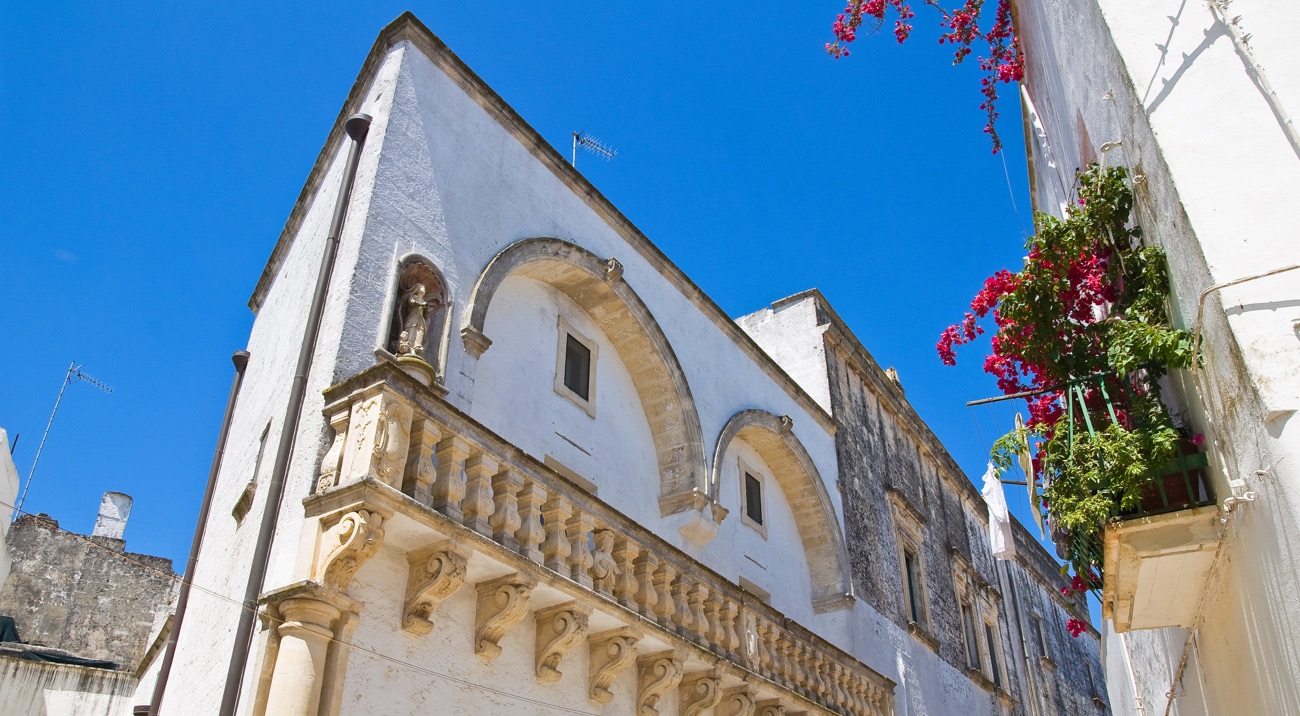
Just a few kilometres from Santa Maria di Leuca lies Specchia, one of the most captivating villages not only in Salento, but in all of southern Italy.
Set on a hill in the Salento countryside, Specchia is a maze of narrow alleyways, baroque palaces, and historic churches that reflect centuries of changing rule — Norman, Angevin, and Aragonese. At the heart of the village is Piazza del Popolo, overlooked by Palazzo Risolo and Palazzo Baronale Ripa, two remarkable buildings well worth the visit on their own. Not to be missed is the Church of Sant’Eufemia, a small Byzantine-origin church dating back to the 9th–10th century, surrounded by olive groves just outside the village.
Presicce-Acquarica is another chapter of the same story. Here too, the historic centre unfolds through 16th-century courtyard houses, baroque churches, and quiet stone lanes. The identity of the village is deeply tied to its 23 underground olive mills — the historic trappeti, where olives were processed for centuries to produce oil exported to Naples and Spain. Eight of these mills are located directly within the historic centre and can still be visited today. The Church of Sant’Andrea Apostolo, with its Renaissance bell tower and nine richly decorated stucco altars, remains the village’s architectural landmark.
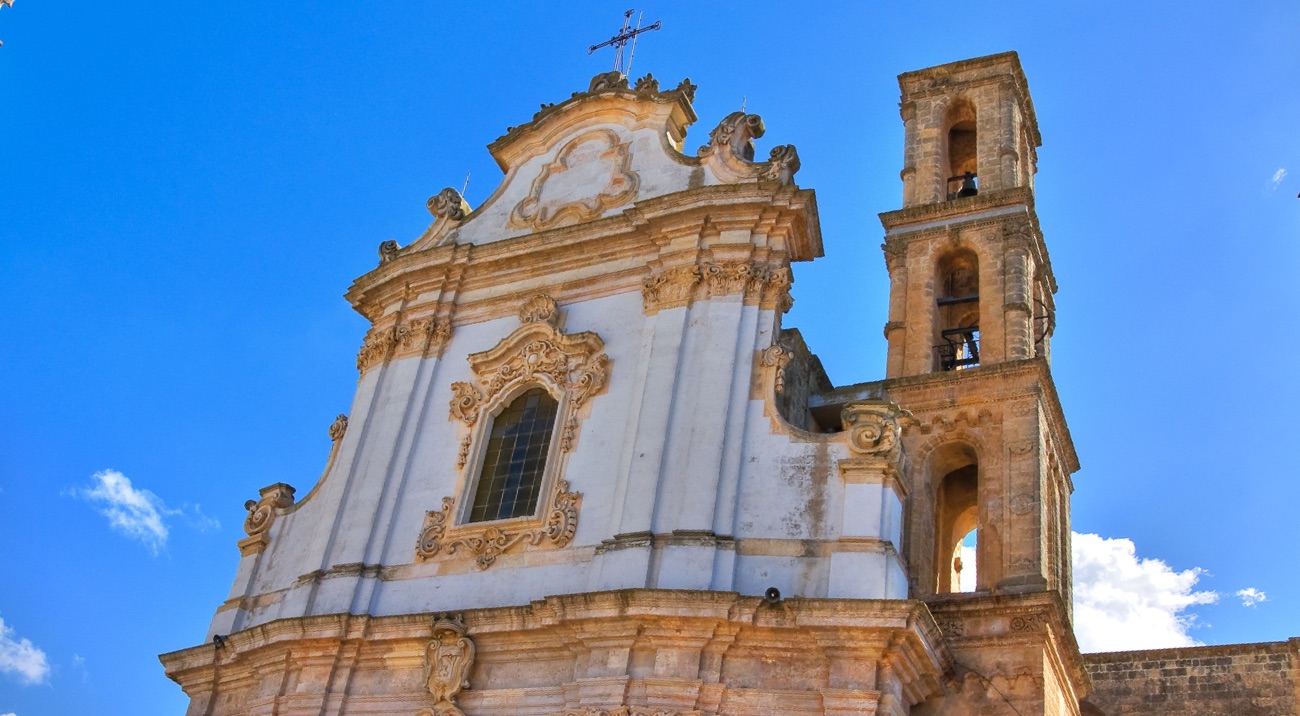
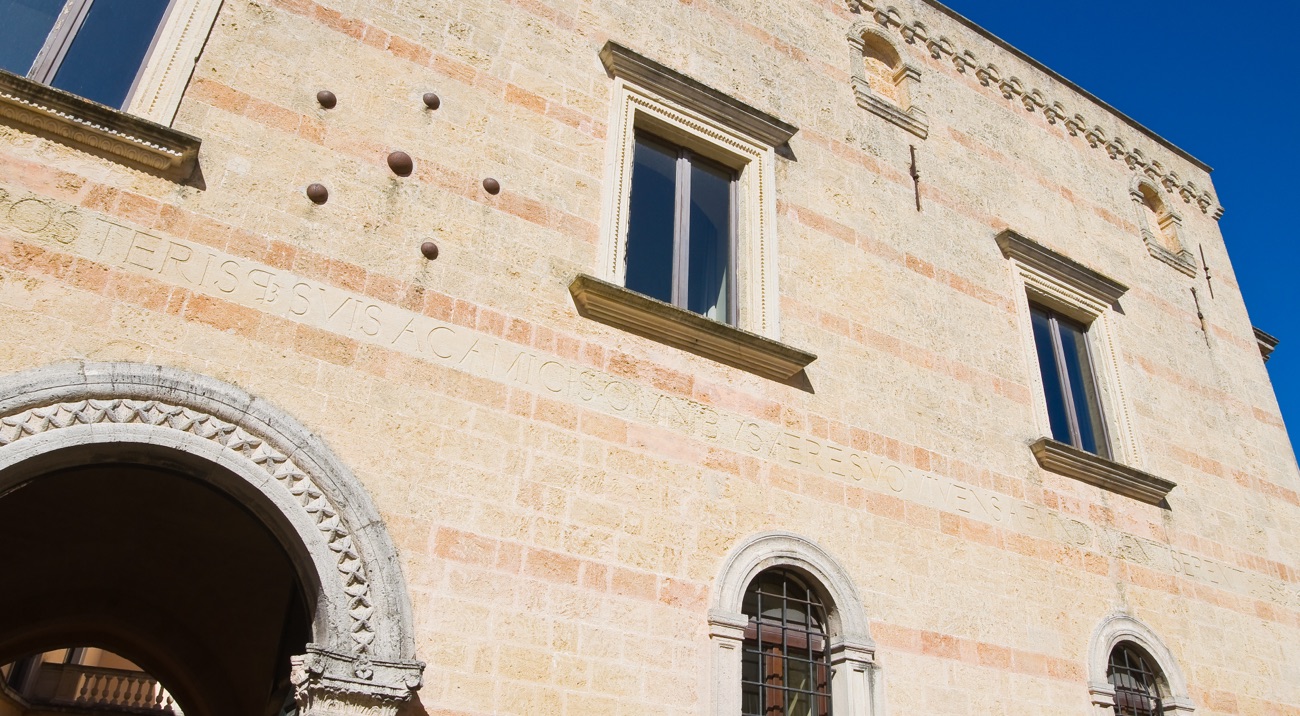
Alessano is another village well worth a stop. Set around 140 metres above sea level at the foot of the Serra dei Cianci hills, it was for centuries one of the most important centres in Capo di Leuca — a bishopric until 1818, a county capital during Angevin rule, and a flourishing commercial and cultural centre between the 15th and 16th centuries under the Del Balzo and Della Ratta families.
Important traces of that period still remain, including the Ducal Palace, built in the late 15th century with Renaissance coats of arms and decorative detailing, and Palazzo Legari, constructed in 1536 and now home to the municipal library.
The historic centre preserves several churches, including the Mother Church of San Salvatore, known for its baroque altars and the quiet dignity typical of Salento villages that have nothing to prove.
Alessano is also the hometown of Don Tonino Bello, the bishop remembered as a symbol of peace and hospitality, now Beatified, whose tomb was visited in prayer by Pope Francis in April 2018. A meaningful journey — spiritual or simply cultural — well worth making.
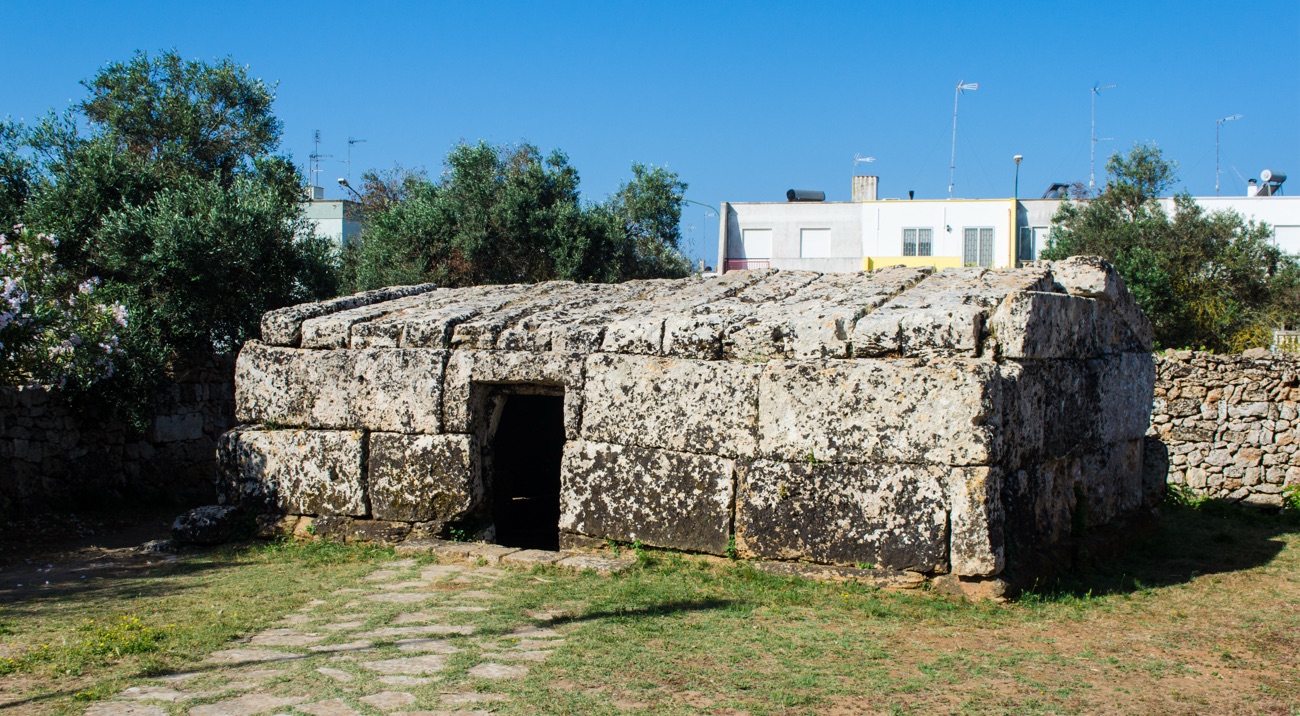
Few people know Patù, and those who discover it rarely forget it. Its name is said to derive from the Greek Pathos, meaning sorrow, in memory of the destruction of Vereto, an important Messapian settlement razed by Saracen raids in the 9th century AD. Patù was later built nearby, using the remains of that lost ancient city.
Here stands one of the most unusual monuments in Salento: the Cento Pietre (“Hundred Stones”), a funerary mausoleum declared a national monument, built in the 9th century in honour of the knight Geminiano, killed by Saracens before the battle of 24 June 877. Rectangular in shape, it was constructed using one hundred limestone slabs taken from the ruins of Vereto.
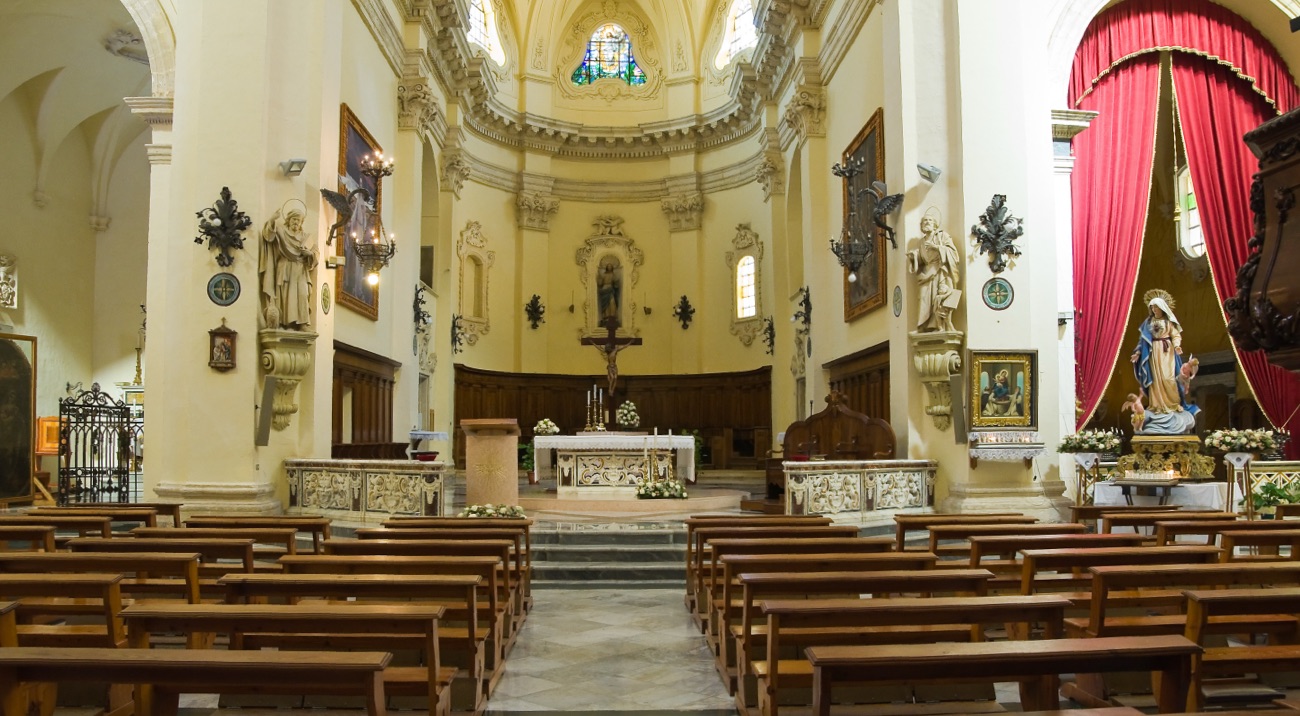
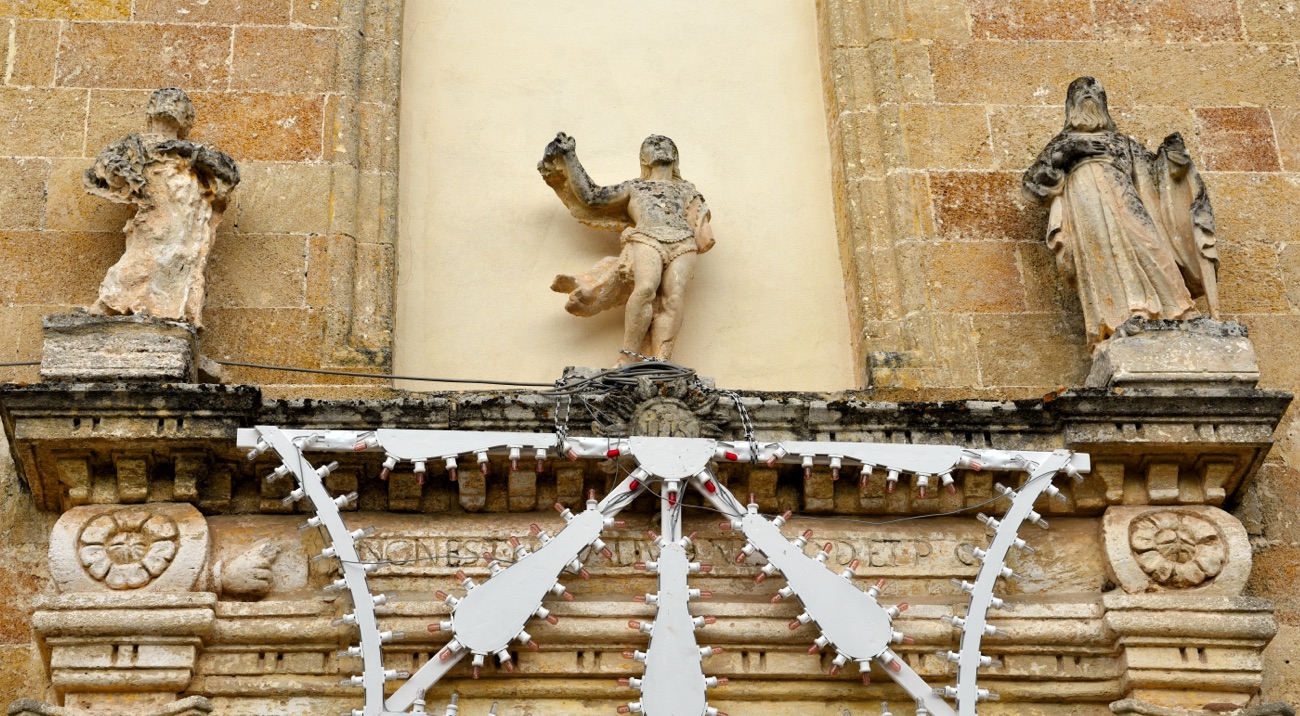
Patù’s churches complete the picture of local architecture. The Mother Church of San Michele Arcangelo, built in 1564, bears an esoteric Latin inscription above its entrance: Terribilis est locus iste. The Church of San Giovanni Battista, built between the 10th and 11th centuries using stones from ancient Vereto, was erected after the battle between Christians and Saracens on 24 July 877. To this day, every 24 June, the village celebrates Saint John the Baptist with a devotion that has remained unchanged over time.
In June, Patù transforms during the Corpus Domini flower festival: its narrow streets are entirely covered with floral “carpets” and intricate artworks made from flower petals, in a celebration that involves the whole village and is well worth a dedicated visit.
DimoreLeuka · Santa Maria di Leuca
Staying at DimoreLeuka means having not only the sea of Leuca within easy reach, but an entire territory filled with places worth discovering. The villages of Capo di Leuca are only a few kilometres away — close enough for a day trip, yet distinct enough from Leuca to feel like another world.
